
- Details
- Hits: 2776
Station: Pequamining, MI
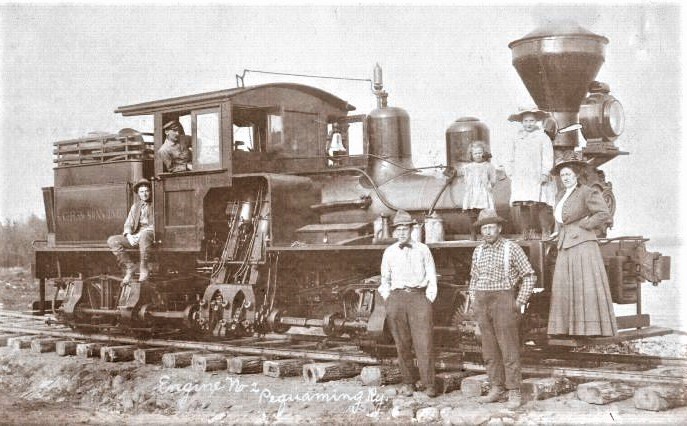
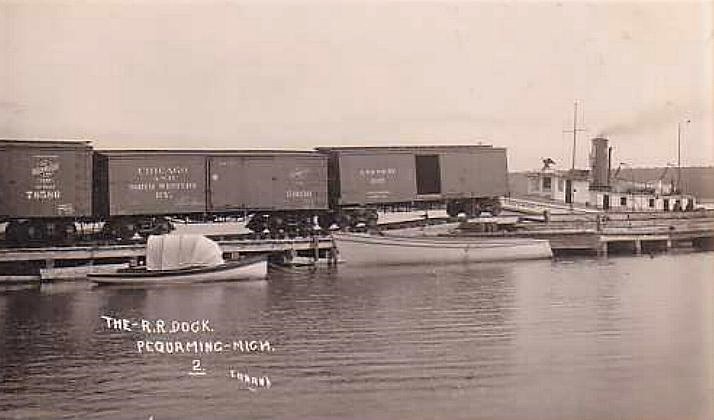
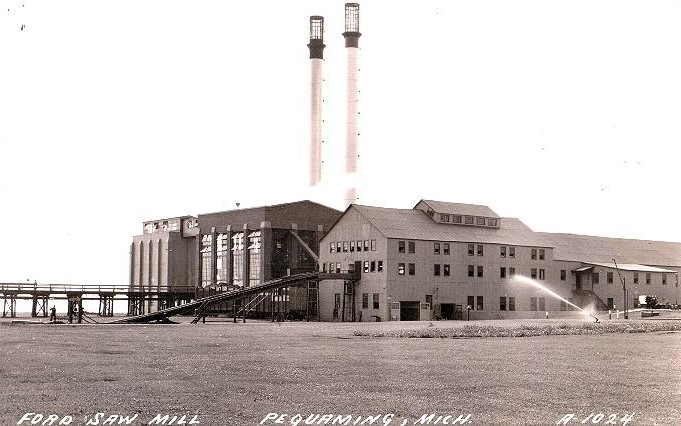
Photo Info: Top, a logging locomotive with crew and family at Pequamining in the early 1900's. 2nd photo, The logging railroad loading dock in Pequamining around 1910. 3rd photo, the Ford Saw Mill at Pequamining in the 1930's. [All, Baraga Historical Society photos.]
Notes
Time Line
1923. Enough timber will be shipped over Ford's railroad to keep the plant at Pequamining running two shifts. [LAS-1923-1214]
1936. June. Extensive logging operations will be started by the Ford Motor company in "L'Anse and Arvon townships. Preparations have begun by fixing and preparing roads and getting logging equipment including heavy trucks and trailers in readiness. An estimated cut of 40 million feet of logs will be taken out and trucked to the mills at L'Anse and Pequamining. The L'Anse mill is on a shingle shift basis until the new logs arrive. At Camp 2, the Ford railroad will be extended about a mile into the timber. The logs will be hauled to the L'Anse plant by rail. Timber will be trucked to both plants, hardwood to L'Anse and the hemlock to Pequamining. A small mill at Plumbago is also operated by the Baraga Lumber Company. [IDG-1936-0609]
Bibliography
The following sources are utilized in this website. [SOURCE-YEAR-MMDD-PG]:
- [AAB| = All Aboard!, by Willis Dunbar, Eerdmans Publishing, Grand Rapids ©1969.
- [AAN] = Alpena Argus newspaper.
- [AARQJ] = American Association of Railroads Quiz Jr. pamphlet. © 1956
- [AATHA] = Ann Arbor Railroad Technical and Historical Association newsletter "The Double A"
- [AB] = Information provided at Michigan History Conference from Andrew Bailey, Port Huron, MI
Contact Us

Email: webmaster@michiganrailroads.com